Vata dosha is the Ayurvedic energy of the space and air elements. It governs all movement in the body and mind: breath, circulation, nerve impulses, the movement of food through the gut and the flow of thoughts. When Vata is balanced you feel creative, light and lively. Excess Vata shows up as worry, light sleep, dry skin, bloating and cold hands and feet. Balancing Vata comes down to warmth, routine, rest, warm cooked food and oil.
Ayurveda describes three doshas, Vata, Pitta and Kapha, sometimes called the Ayurvedic body types. Everyone has all three in a unique mix. This guide covers the Vata body, the signs of a Vata imbalance, a Vata balancing diet and simple daily habits. New to the doshas? Start with our simple guide to Ayurveda.
What is Vata dosha?
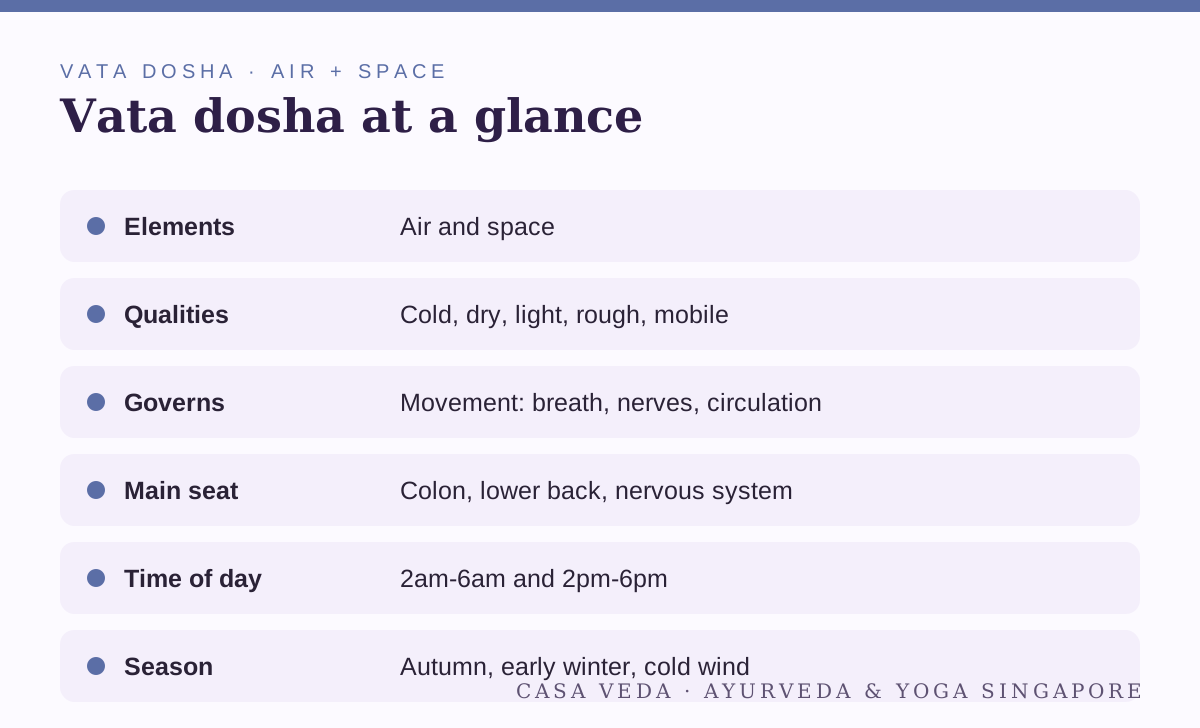
The word Vata comes from the Sanskrit root va, "to move". Vata dosha is the principle of movement. Without it there is no breath, no heartbeat, no peristaltic movement in the gut and no thought. Because it also moves Pitta and Kapha, classical texts call Vata the leader of the three doshas.
Vata shares the qualities of air and space: cold, dry, light, rough, mobile, subtle and clear. Picture a cold, windy autumn day. Ayurveda's core rule is that like increases like and opposites balance. So cold, dry, light and irregular things increase Vata, while warm, moist, grounding and regular things soothe Vata. A balanced Vata is the base for optimal health, emotional stability and optimal well being.
Ayurveda divides Vata into five sub-doshas. Prana governs breathing, the mind and the senses, including visual perception. Udana governs speech. Samana fans the digestive fire, agni. Vyana governs circulation. Apana governs elimination and menstruation. Vata's main seat in the person's body is the colon, with the lower back, bones, ears, skin and nervous system.
The Vata body type: what do Vata people look like?
People whose constitution, or prakriti, is led by Vata are called Vata types. Very few people are only one dosha; many are Vata-Pitta or Vata-Kapha. You may have a Vata body if you:
- Are generally thin, light or tall, with visible joints and veins, and find it hard to gain weight
- Have dry skin and hair, rough skin on the heels and hands, and cracking joints
- Have cold hands and feet and find cold and wind difficult
- Have an irregular appetite and digestion
- Sleep lightly and wake easily
- Are quick, creative, talkative and full of ideas, and love travel, music and change
- Learn fast, forget fast, and worry when stressed
Our free dosha quiz gives you a first idea of whether you are Vata, Pitta or Kapha.
Vata imbalance: signs of excess Vata
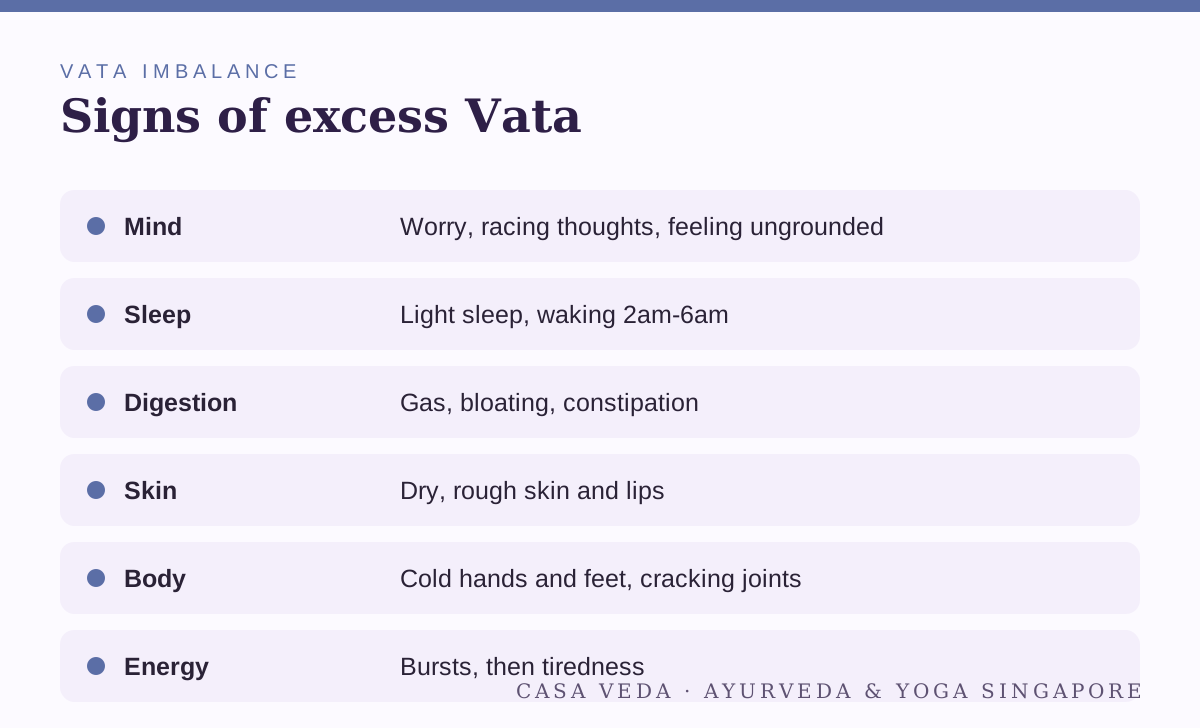
Your natural constitution is your prakriti; your current state is your vikriti. Anyone can develop a Vata imbalance, but Vata types are the most prone to it. Common signs of excess Vata include:
- Mind: anxiety, racing thoughts, poor focus, feeling ungrounded or scattered
- Sleep: trouble falling asleep, light sleep, waking between 2am and 6am, no restful sleep
- Digestion: gas, bloating, irregular or slow digestion, constipation
- Skin: dry skin, chapped lips, brittle nails
- Body: cold hands, stiffness, muscle spasms, dry and cracking joints, lower back aches
- Energy: bursts of activity, then exhaustion; feeling "wired but tired"
These are traditional Ayurvedic signs, not a medical diagnosis. Ongoing anxiety, insomnia, gut problems, pain or weight loss always need a check with your doctor.
What aggravates Vata?
Anything mobile, light, cold or dry pushes Vata up: irregular eating, skipped meals and late nights; travel and jet lag; cold drinks, raw foods and dry foods such as crackers and chips; stress, multitasking, screens and loud noises; intense exercise without rest; cold, windy weather or strong air-conditioning; grief and big life changes; and later life, which Ayurveda sees as the Vata stage.
A Vata balancing diet
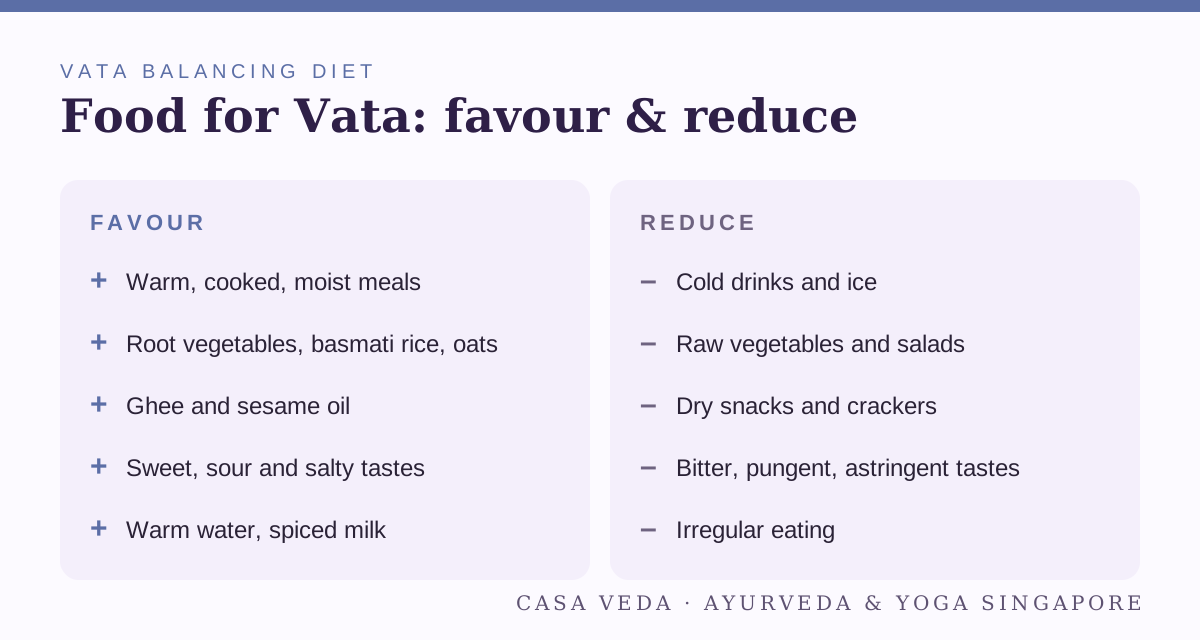
A Vata pacifying diet is warm, moist, well cooked and gently spiced, eaten at regular times. The sweet taste, sour and salty tastes soothe Vata. Bitter, pungent and astringent tastes increase it, so keep them to moderate amounts.
Foods that balance Vata dosha
- Grains: basmati rice, oats, quinoa, wheat, warm porridge
- Vegetables: root vegetables such as sweet potato, carrot and beetroot, plus pumpkin, zucchini, asparagus and green beans, always well cooked
- Fruit: sweet, ripe fruit such as banana, mango, papaya and soaked dates; Ayurveda suggests fruit is best eaten separately from meals
- Protein: mung dal, eggs, fish, chicken, tofu
- Healthy fats: ghee, sesame oil, olive oil and avocado for deep nourishment
- Warming spices: mild spices and digestive spices such as ginger, cumin, cinnamon, cardamom, fennel and a little black pepper
- Drinks: warm water, ginger tea, and warm milk or hot spiced milk with nutmeg and cardamom at night
Vata aggravating foods to reduce
Cut back on cold drinks and ice, raw vegetables and big salads, dry snacks, puffed cereals, too many beans, cabbage and cauliflower, very hot chilli, lots of coffee and alcohol. Moist foods such as soups, stews and dal are better choices.
What is the best breakfast for Vata?
A warm, moist breakfast is ideal: oat or rice porridge cooked with milk, ghee, cinnamon and stewed apple or soaked dates. A bowl of kitchari is the classic Ayurvedic one-pot meal for Vata at any time of day.
How to balance Vata dosha: daily habits
Ayurveda's answer is simple: to bring Vata back into balance, add the opposite qualities of warmth, moisture, stillness and rhythm. Small habits kept every day keep it in balance.
- Keep a steady routine. Wake, eat and sleep at the same times. Routine is the most powerful Vata balancing tool. See our guide to dinacharya, the Ayurvedic daily routine.
- Oil your body. Warm sesame oil abhyanga on your own body before your shower calms the nervous system and softens rough skin.
- Stay warm. Carry a layer for air-conditioned offices, malls and the MRT.
- Eat warm, cooked meals and sip warm water through the day.
- Slow down. Do one thing at a time and create a peaceful environment at home, with soothing music instead of loud noises.
- Sleep by 10pm. A warm oil foot therapy and spiced milk before bed support restful sleep. Read Ayurveda for sleep.
How to reduce Vata dosha immediately
For quick relief, bring in warmth, oil and stillness: have a warm meal or drink, rub warm oil into your feet, wrap up warmly and take ten slow breaths with a long exhale. Then rest.
Yoga for balancing Vata
Vata needs gentle yoga that grounds and steadies the body and mind. Choose a slow pace and long holds. Fast, jumping flows can leave Vata types drained.
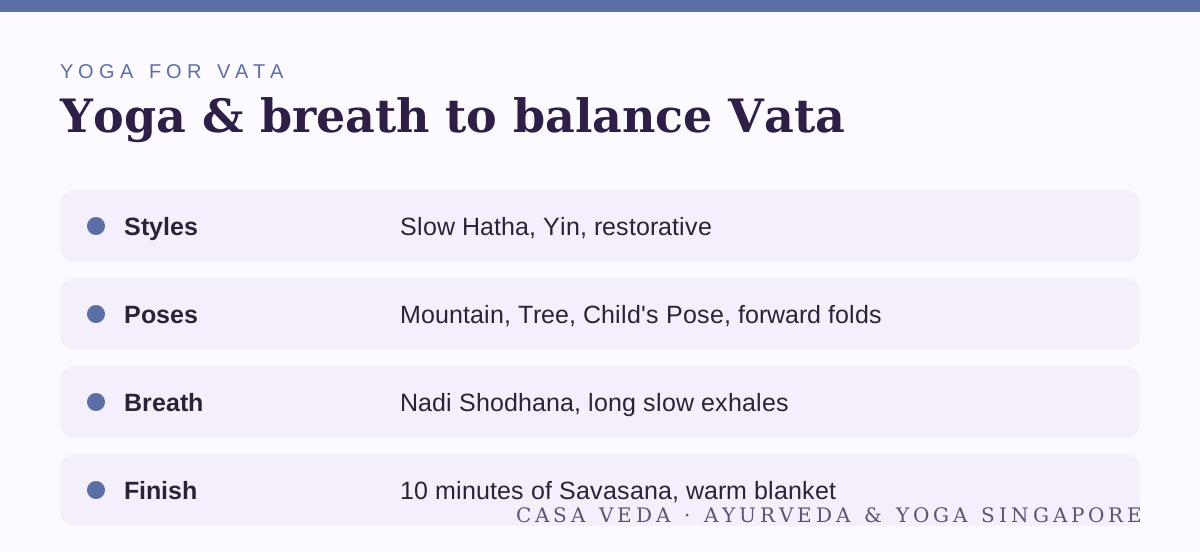
- Styles: slow Hatha, Yin, restorative yoga, gentle Kundalini; tai chi and walking are also good
- Poses: Mountain, Tree, Warrior II, Child's Pose, seated forward folds, Legs-Up-the-Wall
- Breath: Nadi Shodhana (alternate nostril breathing) and long, slow exhales
- Rest: finish with 10 minutes of Savasana under a blanket
See yoga for your dosha, or book private yoga in Singapore.
Ayurvedic treatments that soothe Vata
Oil is Vata's best friend. Abhyanga, a warm oil therapy, nourishes dry skin and steadies the nervous system. Shirodhara, warm oil poured over the forehead, is traditionally used for a busy mind and poor sleep. Both are offered as Ayurvedic therapy in Singapore. Herbs such as ashwagandha are often linked with Vata, but take herbs only on the advice of a qualified practitioner, especially if you take medication.
Vata vs Pitta dosha vs Kapha dosha
| Vata | Pitta | Kapha | |
|---|---|---|---|
| Elements | Air + space | Fire + water | Earth + water |
| Qualities | Cold, dry, light, mobile | Hot, sharp, oily | Heavy, slow, stable |
| Body | Thin, light | Medium, athletic | Solid, strong |
| Out of balance | Anxiety, dryness, bloating | Irritability, heat, acidity | Sluggishness, congestion |
| Balanced by | Warmth, routine, oil | Cooling, calm | Movement, lightness |
Read our guides to Pitta dosha and Kapha dosha.
Vata in Singapore
Singapore is hot and humid, which usually soothes Vata. But icy air-conditioning, cold drinks, long hours, late nights and travel all push it up. Small changes help: warm drinks, a layer for the office and a regular bedtime. For overall balance and lasting well being, an Ayurvedic consultation in Singapore gives you a plan made for your body and mind.
Vata dosha FAQs
What is a Vata imbalance?
A Vata imbalance means the air and space energy in your body is too high. It often shows up as anxiety, light sleep, dryness, cold hands and feet, gas, bloating, irregular digestion and constipation.
What food should Vata avoid?
Vata should reduce cold drinks, raw foods, dry snacks, too many beans, very hot chilli, and lots of coffee or alcohol. Warm, cooked, moist meals with healthy fats suit Vata best.
What foods balance Vata dosha?
Warm, cooked foods with sweet, sour and salty tastes: basmati rice, oats, root vegetables, ripe fruit, mung dal, ghee, sesame oil and warming spices such as ginger and cinnamon.
How do I know which dosha is out of balance?
Look at your symptoms. Dryness, worry and bloating point to Vata; heat and irritability to Pitta; heaviness and congestion to Kapha. An Ayurvedic consultation can confirm it.
Which yoga is best for Vata dosha?
Slow, grounding yoga: Hatha with long holds and forward folds, Yin, restorative yoga and gentle Kundalini, finished with a long relaxation. Alternate nostril breathing is especially calming.
More from the journal
Pitta Dosha: What It Is & How to Balance It
Fire and water in balance. The Pitta body type, signs of Pitta imbalance, and the cooling food, habits and yoga that calm Pitta down.
Read · 10 min →DoshasKapha Dosha: What It Is & How to Balance It
Earth and water, steady and strong. The Kapha body type, signs of a Kapha imbalance, and the food, movement and yoga that bring Kapha back to lightness.
Read · 9 min →YogaYoga for Your Dosha: Best Practice for Vata, Pitta & Kapha
Ayurvedic yoga for Vata, Pitta and Kapha: the styles, poses and breathing that suit each dosha, and what to avoid.
Read · 8 min →Find out how much Vata you have
Book an Ayurvedic consultation with Livia in Singapore, by appointment, and get a plan made for your dosha.