Kapha dosha is the Ayurvedic energy of the earth and water elements. It gives the body its structure, strength and stability, keeps the joints and tissues moist, and supports a steady immune system. When Kapha is balanced you feel calm, patient, loyal and strong. A Kapha imbalance shows up as lethargy, weight gain, sluggish digestion, congestion and low motivation. Balancing Kapha dosha comes down to warmth, lightness and movement: warm, light meals, an early start and physical activity every day.
Ayurveda describes three doshas, Vata, Pitta and Kapha, sometimes called the Ayurvedic body types. If you often feel heavy, slow or congested, this guide is for you. It covers the Kapha body type, the common symptoms of a Kapha dosha imbalance, what causes it, a Kapha balancing diet, daily habits and yoga. New to the doshas? Start with our simple guide to Ayurveda.
What is Kapha dosha?
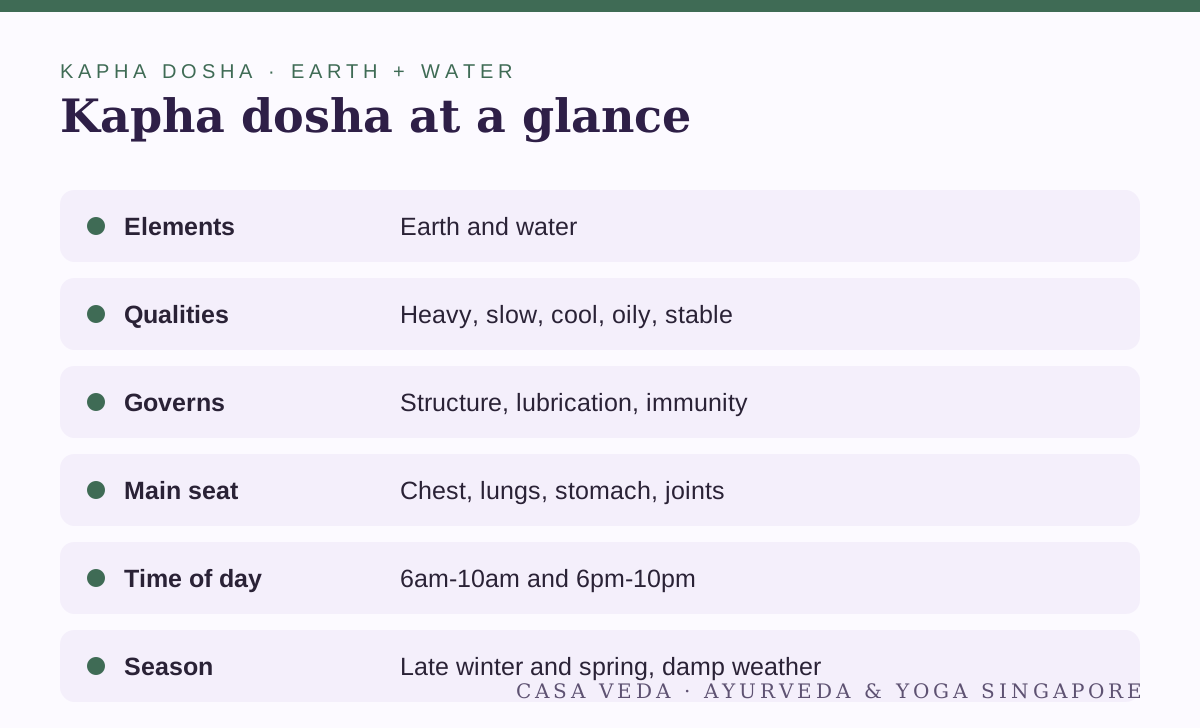
The word Kapha is often translated as "that which holds things together". Kapha dosha is the principle of structure and lubrication, and the heaviest and most stable of the three doshas. It builds the bones, muscles and tissues, holds the human body together, and keeps the joints, skin and mucous membranes moist. In Ayurvedic wisdom it plays a vital role in strength, stamina and a steady immune system.
Kapha shares the qualities of earth and water: heavy, slow, cool, oily, smooth, stable and soft. Ayurveda's core rule is that like increases like and opposites balance. So heavy, cold and still things increase Kapha, while light, warm, dry and active things bring Kapha balance. A healthy Kapha gives steady energy, deep sleep, a good memory, a calm, kind nature and a deep sense of well being. It also supports psychological functions such as patience, loyalty and contentment. In Ayurveda, balanced Kapha is part of the base of good health.
The five sub-doshas of Kapha
Ayurveda divides Kapha into five sub-doshas, each with its own seat in the human body:
- Kledaka kapha lives in the stomach. It moistens food and protects the stomach lining, working alongside the digestive fire, agni.
- Avalambaka kapha sits in the chest and heart. It supports the lungs and heart and gives the upper body its strength.
- Bodhaka kapha is in the tongue and mouth. It gives us our sense of taste.
- Tarpaka kapha is in the head. It is said to protect and nourish the brain and sense organs, and is linked with calm and memory.
- Shleshaka kapha lubricates the joints so they move smoothly.
The Kapha body type: what are Kapha types like?
People whose constitution, or prakriti, is led by Kapha are called Kapha types. Very few people are only one dosha; many are Vata-Kapha or Pitta-Kapha. You may have a Kapha body if you:
- Have a larger, solid, strong frame and gain weight easily
- Have smooth, soft, slightly oily skin and thick, lustrous hair
- Have good stamina and strong health, and rarely feel rushed
- Sleep deeply and love a long lie-in
- Have a steady appetite but a slower metabolism, and can skip a meal with ease
- In balance, are calm, caring and loyal, and learn slowly but remember for a long time
Our free dosha quiz gives you a first idea of whether you are Vata, Pitta or Kapha.
Kapha dosha imbalance: common symptoms
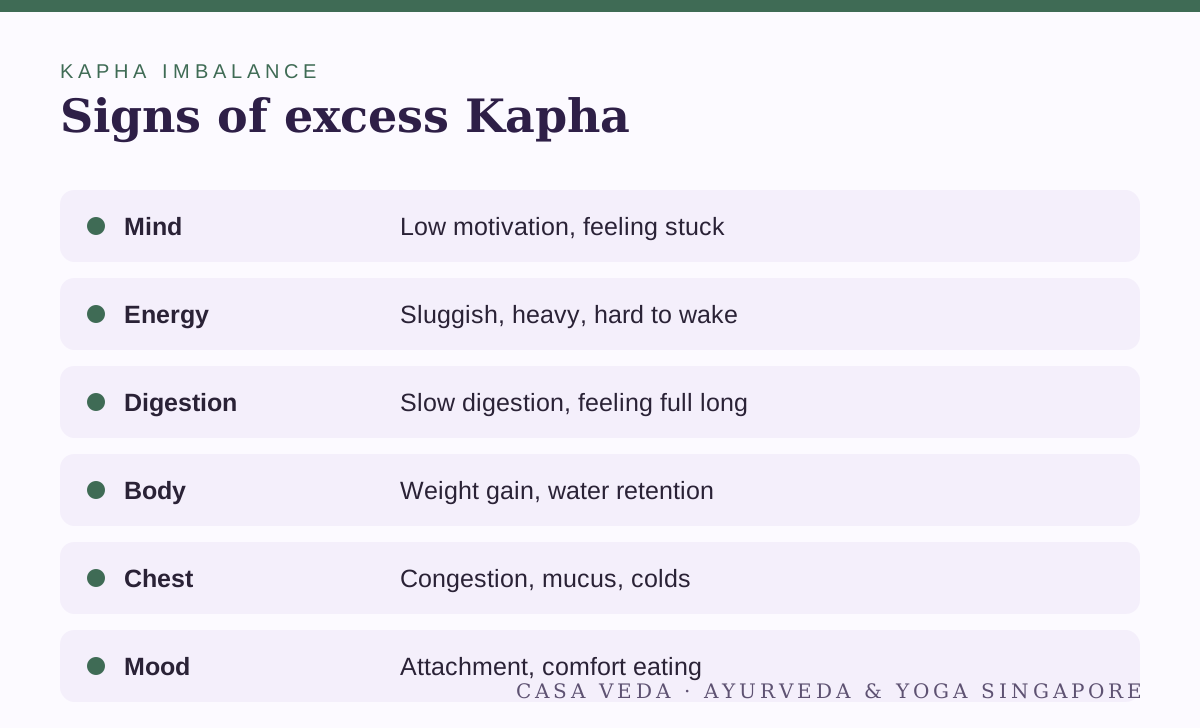
Your natural constitution is your prakriti; your current state, including any dosha imbalance, is your vikriti. Anyone can develop a Kapha dosha imbalance, but Kapha types are the most prone to it. Kapha naturally rises in late winter and spring, in the early morning and evening, and in childhood, so symptoms often feel stronger then. Common symptoms of excess Kapha include:
- Energy: lethargy, heaviness, feeling slow to get going in the morning
- Sleep: oversleeping and still waking tired, a strong pull to nap after meals
- Digestion: sluggish digestion, a heavy feeling after meals, a sluggish metabolism and little appetite in the morning
- Weight: weight gain and water retention that are hard to shift
- Chest and sinuses: sinus congestion, mucus, a heavy chest, frequent colds
- Skin: oily skin and congested pores
- Mind: low motivation, dullness, attachment to things, people and habits, and resistance to change
These are traditional Ayurvedic signs of a dosha imbalance, not a medical diagnosis. Ongoing symptoms such as tiredness, weight changes, breathing problems, low mood or digestive issues always need a check with your doctor.
What causes Kapha to rise?
Anything heavy, cold, sweet or still pushes Kapha up. Common causes of a Kapha dosha imbalance are heavy foods such as fried food, rich sauces and big portions; cold foods and cold drinks; milk, cheese and other dairy; sweets, white bread and pastries; oversleeping and daytime naps; long hours sitting with little movement; and cold, damp weather.
A Kapha balancing diet
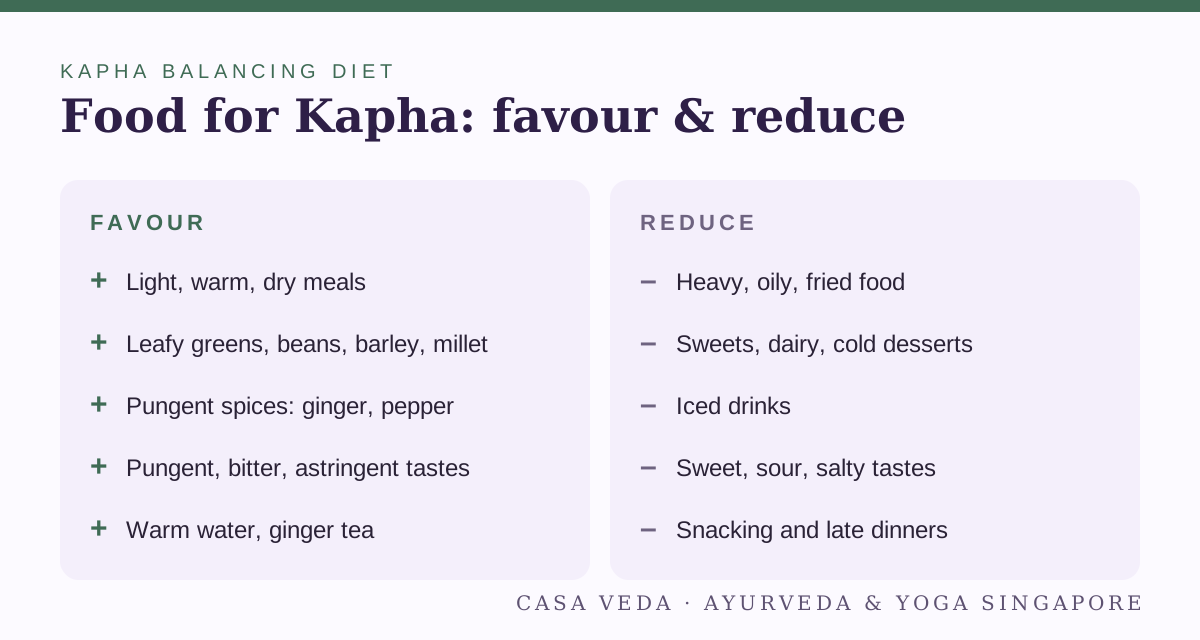
For Kapha balance, a Kapha pacifying diet is light, warm, well spiced and low in fat. Pungent, bitter and astringent tastes reduce Kapha. Sweet, sour and salty tastes increase it, so keep them to small amounts. Eat your main meal at lunch, when the digestive fire is strongest, and leave three to four hours between meals.
Foods that balance Kapha dosha
- Grains: light grains such as barley, millet, buckwheat and quinoa
- Vegetables: most vegetables, especially leafy greens, onion, garlic, broccoli, cabbage, cauliflower, asparagus, radish and bitter gourd, lightly cooked
- Beans and lentils: mung beans, red lentils, chickpeas and most other beans
- Fruit: apples, pears, pomegranate and berries, in small amounts
- Healthy fats: very little; a little olive oil, ghee or mustard oil is enough
- Spices: fresh ginger, black pepper, cinnamon, turmeric, cumin, cloves and mustard seed; almost all spices suit Kapha and help kindle the digestive fire
- Drinks: hot water through the day and spiced teas such as cinnamon or tulsi; a little raw honey, traditionally never heated, is the sweetener Ayurveda favours for Kapha
Dry foods such as rice cakes, puffed grains and roasted chickpeas suit Kapha in moderation.
Kapha aggravating foods to reduce
Reduce heavy and fried foods, sweets and desserts, white flour, cold foods and iced drinks, milk, cheese, yogurt and ice cream, red meat and too much salt.
Lentil soup and other light evening meals
A bowl of spiced lentil soup or mung dal with steamed vegetables makes an ideal light dinner for Kapha. Eat it early and keep it small. For a gentle reset, try a simple kitchari made with more mung beans than rice, extra ginger and only a little ghee. Preparation matters too: fresh, lightly cooked meals suit Kapha better than heavy, reheated dishes.
Herbs traditionally used for Kapha balance
Ayurveda traditionally uses warming herbs for Kapha. Trikatu, a blend of ginger, black pepper and pippali (long pepper), is a classic Kapha formula. Tulsi (holy basil) and turmeric are also traditionally used, and many of these herbs are kitchen spices too. In Ayurvedic texts these herbs are described by their taste and qualities, not as medicines with proven medicinal properties. Take herbs only on the advice of a qualified practitioner, especially if you have a health condition, are pregnant or take medication.
How to balance Kapha dosha: daily habits
Ayurveda offers a simple answer: to bring Kapha back into balance, add the opposite qualities of lightness, warmth, movement and change. Small, healthy habits kept every day ease symptoms and are the best way to prevent a dosha imbalance, and the heart of balancing Kapha dosha.
- Rise early. Get up before 6am, before the heavy Kapha time of the morning sets in.
- Move every day. Physical activity is the most powerful tool for Kapha balance. Brisk exercise that makes you sweat a little, ideally in the morning, is traditionally said to wake up a slow metabolism.
- Skip daytime naps. Ayurveda sees naps as one of the quickest ways to increase Kapha.
- Dry brush your skin. A brisk dry rub with raw silk gloves or a soft brush, called garshana, before your shower is traditionally used to wake up the body and feel lighter.
- Eat warm, light meals and sip hot water through the day.
How to reduce Kapha dosha quickly
When Kapha symptoms flare, bring in warmth, lightness and movement: sip hot water with a slice of ginger, take a brisk walk or do a few rounds of sun salutations, and eat a smaller meal of light foods. Then keep your body moving.
Yoga for balancing Kapha dosha
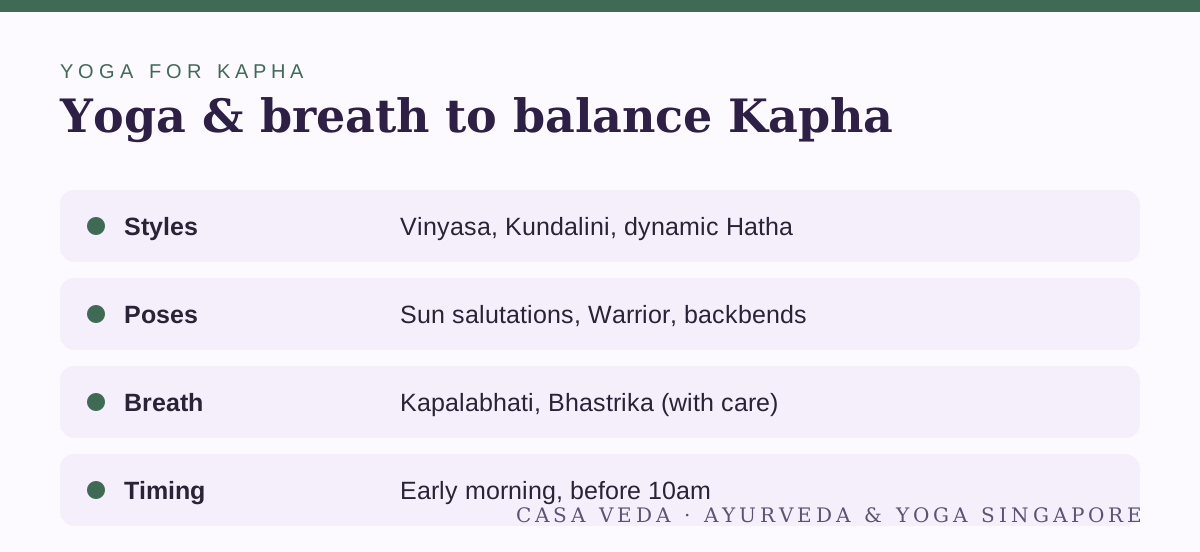
Yoga is one of the simplest ways to ease a Kapha dosha imbalance. For Kapha balance, choose yoga that warms, energises and lifts the body and mind. Long, sleepy holds can leave the body feeling heavier.
- Styles: Vinyasa flow, dynamic Hatha and Kundalini
- Sequences: Surya Namaskar (sun salutations), several rounds at a steady pace
- Poses: Warrior I and II, Chair, Boat, Cobra, Bow and gentle twists that open the chest
- Breath: energising breath such as Kapalabhati (skull-shining breath) and Bhastrika (bellows breath). Learn them from a teacher first. Skip them if you are pregnant or have high blood pressure, heart problems or recent surgery, and stop if you feel dizzy.
At CASA VEDA, Livia teaches Kundalini and energising yoga with pranayama and breathwork, by appointment. See yoga for your dosha, or book private yoga in Singapore.
Ayurvedic treatments for Kapha balance
Where Vata loves oil, Kapha finds balance in warmth and stimulation. Kizhi, a treatment with warm poultices of herbs pressed over the muscles and joints, brings heat and a gentle lift. Abhyanga for Kapha uses only a little light, warming oil and brisk strokes. Both are offered as Ayurvedic therapy in Singapore. Our Ayurvedic detox programme starts with a consultation as preparation, then adds daily treatments, a food plan and a yoga and breathing session.
Vata vs Pitta dosha vs Kapha dosha
| Vata | Pitta | Kapha | |
|---|---|---|---|
| Elements | Air + space | Fire + water | Earth + water |
| Qualities | Cold, dry, light, mobile | Hot, sharp, oily | Heavy, slow, cool, stable |
| Body | Thin, light | Medium, athletic | Solid, strong |
| Signs of imbalance | Anxiety, dryness, bloating | Irritability, heat, acidity | Lethargy, weight gain, congestion |
| Balanced by | Warmth, routine, oil | Cooling, calm | Movement, lightness, warmth |
Read our guides to Vata dosha and Pitta dosha.
Kapha in Singapore
Singapore's humidity, rain and damp air share Kapha's heavy, moist qualities and can add to a Kapha imbalance and its symptoms. Long hours at a desk, rich hawker meals, sweet drinks and iced desserts push it up further. Small changes help Kapha balance: hot drinks instead of iced ones, an early evening meal, a brisk morning walk and an early start. For lasting health and well being, an Ayurvedic consultation in Singapore can spot a dosha imbalance early and gives you a plan made for your body and mind.
Kapha dosha FAQs
What causes Kapha dosha?
A diet heavy in fried, sweet and cold foods, a lot of dairy, oversleeping, daytime naps, too little movement and cold, damp weather all increase Kapha and can lead to an imbalance.
What food should Kapha avoid?
Kapha should cut back on fried foods, sweets, white flour, cold drinks, ice cream, and milk and other dairy. Light, warm, well spiced meals with plenty of vegetables and beans make a healthy Kapha diet.
How to get rid of excess Kapha from the body?
To clear a Kapha dosha imbalance, Ayurveda adds the opposite qualities: daily physical activity, rising early, no daytime naps, light warm meals, warming spices and hot water. Changes kept up for a few weeks support Kapha balance and health better than a quick fix.
How many hours should Kapha sleep?
Ayurveda traditionally suggests Kapha types need the least sleep of the three doshas, often around seven hours, waking before 6am. Too much sleep tends to deepen a dosha imbalance, leaving Kapha heavier, not more rested. If you feel tired all the time, see your doctor.
Why does Ayurveda say not to eat yogurt at night?
In an Ayurvedic diet, yogurt is seen as heavy, sour and mucus-forming, qualities that increase Kapha. Digestion is traditionally thought to be slower at night, so yogurt in the evening may add to heaviness and congestion in the body.
How do I know if I am Vata, Pitta or Kapha?
Look at your body, sleep, digestion and mind over your whole life. Your birth constitution and a current dosha imbalance can differ, so look at your symptoms too. Take our dosha quiz for a first idea, and an Ayurvedic consultation can confirm it.
More from the journal
Vata Dosha: What It Is & How to Balance It
Air and space in motion. The Vata body type, signs of Vata imbalance, and the food, routine and yoga that bring Vata back to calm.
Read · 9 min →DoshasPitta Dosha: What It Is & How to Balance It
Fire and water in balance. The Pitta body type, signs of Pitta imbalance, and the cooling food, habits and yoga that calm Pitta down.
Read · 10 min →YogaYoga for Your Dosha: Best Practice for Vata, Pitta & Kapha
Ayurvedic yoga for Vata, Pitta and Kapha: the styles, poses and breathing that suit each dosha, and what to avoid.
Read · 8 min →Find out how much Kapha you have
Book an Ayurvedic consultation with Livia in Singapore, by appointment, and get a plan made for your dosha.