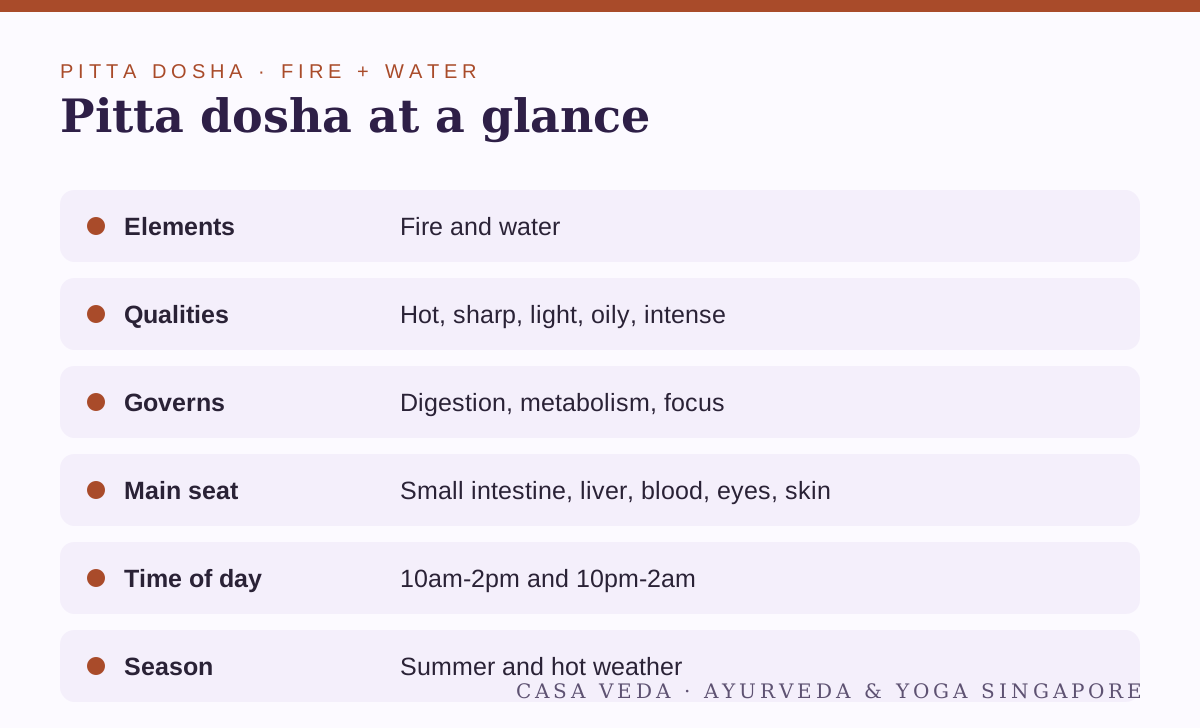
Pitta dosha is the Ayurvedic energy of the fire and water elements. It governs heat and transformation in the body and mind: digestion, metabolism, body temperature, clear sight and sharp thinking. When Pitta is balanced you feel warm, focused and confident. Excess Pitta shows up as heat, excessive sweating, acidity, loose stools, irritated skin and a short temper. To balance Pitta, keep the body cool and the mind calm: cooling foods, regular meals, shade, rest and non-competitive movement.
Ayurveda describes three doshas, Vata, Pitta and Kapha. Everyone has all three, in each person's unique ratio, and that mix is your Ayurvedic constitution. This guide covers the Pitta body type, the signs of a Pitta imbalance, a Pitta pacifying diet and simple daily habits. New to the doshas? Start with our simple guide to Ayurveda.
What is Pitta dosha?
Ayurveda teaches that everything is made of five elements: space, air, fire, water and earth. The doshas are the ways these elements combine in a person's physiological and mental makeup. Pitta is where fire and water meet. Fire gives it heat and drive; water keeps it fluid, so it can flow through the body like warm oil or bile.
Pitta dosha is hot, sharp, light, oily, liquid and spreading. Picture the midday sun in summer. Ayurveda's core rule is that like increases like and opposites balance. So hot, sharp and intense things increase Pitta, while cool, soft, sweet and steady things calm it.
What Pitta controls in the body
Pitta controls everything that transforms, from food into energy to ideas into plans. Ayurveda divides it into five sub-doshas. Pachaka governs the digestive fire, agni, in the stomach and small intestine. Ranjaka works in the liver and blood. Sadhaka sits in the heart and governs emotions and understanding. Alochaka governs the eyes and sight. Bhrajaka governs the skin and its glow. Pitta's main seat is the small intestine, with the liver, blood, eyes, skin and sweat.
The Pitta body type: what are Pitta people like?
People whose prakriti is led by Pitta are called Pitta types. Many people are a mix, such as Vata-Pitta or Pitta-Kapha. You may have a Pitta body type if you:
- Have a medium, athletic build and gain or lose weight fairly easily
- Feel warm, sweat easily and find hot weather hard
- Have warm, sensitive skin that flushes, freckles or breaks out
- Have strong digestion and sharp hunger, and feel irritable when a meal is late
- Have bright, focused eyes that may be sensitive to strong light
- Are driven, organised and competitive, with a sharp intellect and a clear voice
- Love a goal and a plan, and can be impatient or critical when stressed
Pitta individuals often make natural leaders. Our free dosha quiz gives you a first idea of your Ayurvedic body type.
Pitta imbalance: signs of excess Pitta
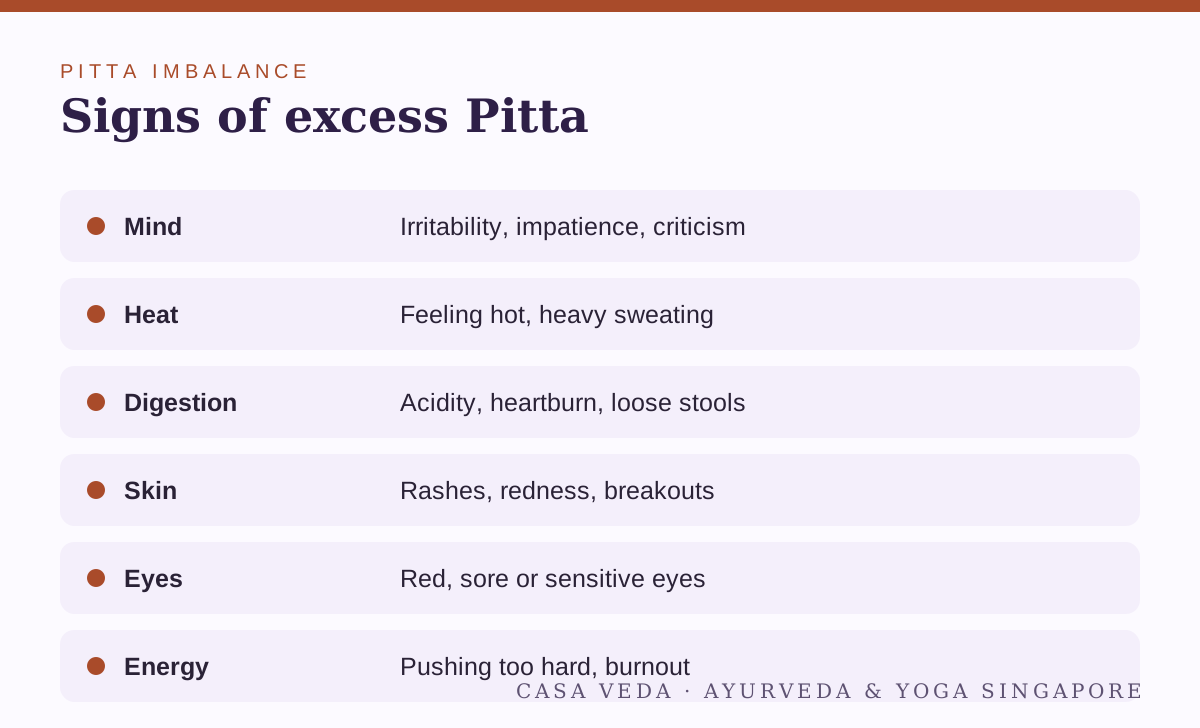
Your natural constitution is your prakriti; your current state is your vikriti. Anyone can build up excess heat, but Pitta people are the most prone to it. Common signs of a Pitta imbalance include:
- Heat: feeling hot, excessive sweating, flushed face, low tolerance of sun and heat
- Digestion: acidity, heartburn, loose stools, hunger that turns to irritability
- Skin: irritated skin, rashes, redness, breakouts
- Eyes: red, sore or sensitive eyes
- Mind: irritability, impatience, anger, harsh self-criticism
- Energy: pushing too hard, poor sleep from a busy mind, then burnout
These are traditional Ayurvedic signs, not a medical diagnosis. Ongoing heartburn, gut problems, skin conditions, headaches or physical symptoms that do not settle always need a check with your doctor.
What aggravates Pitta?
Anything hot, sharp or intense can aggravate Pitta: spicy food, fried foods, fermented foods and sour foods; excessive alcohol and lots of coffee; meals you skip or eat late; direct sunlight and exercise at peak heat; prolonged exposure to excessive heat and humidity; and competitive overwork, deadlines and anger. Ayurveda also links Pitta with summer, with the middle of the day, 10am to 2pm, and with adult working life.
A Pitta pacifying diet
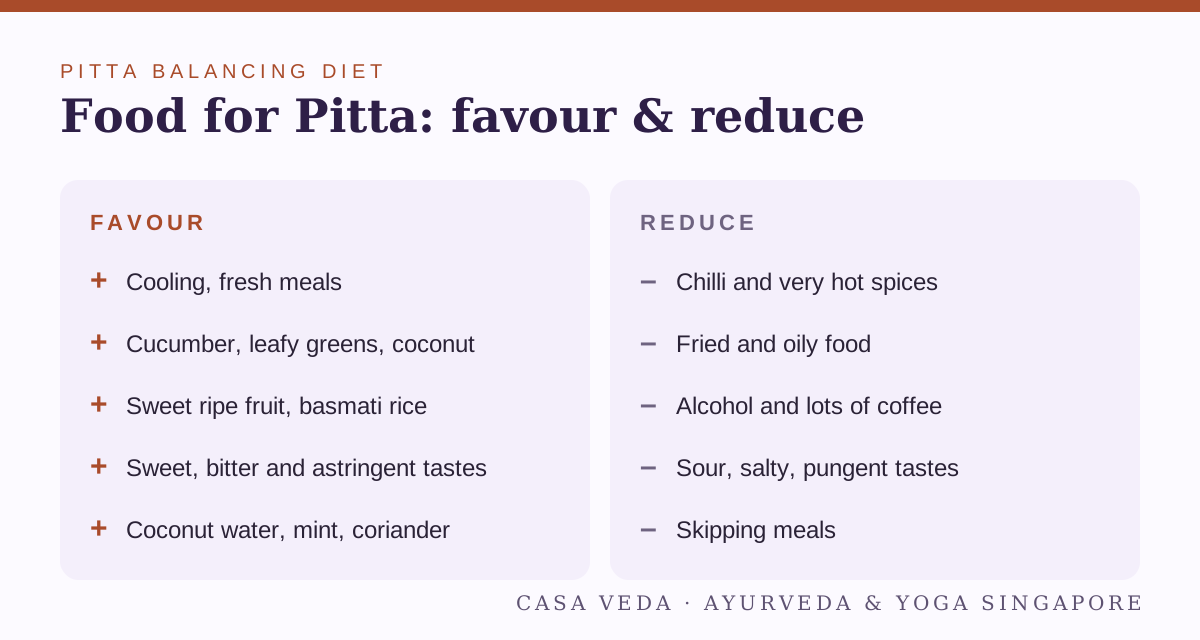
This way of eating is cooling, fresh and calming, eaten at regular times. Cooling foods are the simplest way to balance Pitta. The sweet, bitter and astringent tastes soothe Pitta. Pungent, sour and salty tastes increase internal heat, so keep them small. Fresh, simple and light diets suit Pitta best, especially in hot weather. These are general guidelines; your own plan depends on your Ayurvedic constitution.
Foods that balance Pitta dosha
- Grains: basmati rice, oats, barley, wheat and other whole grains; Ayurveda sees white basmati as cooler than brown rice
- Vegetables: naturally cooling foods such as cucumber, leafy greens, zucchini, asparagus, broccoli, sweet potato and okra, raw in moderation or well cooked
- Fruit: sweet fruits such as melon, pear, sweet grapes, ripe mango, coconut and soaked raisins
- Protein: mung dal, chickpeas, tofu, eggs in moderation, chicken and freshwater fish
- Healthy fats: ghee and coconut oil, plus a little sunflower or olive oil
- Cooling spices: coriander, fennel, cardamom, mint and a little turmeric and cumin
- Drinks: coconut water, cool (not iced) water, mint or fennel tea and milk
Foods that aggravate Pitta
Cut back on hot spices such as chilli and cayenne, red meat, salty foods, sour fruits such as unripe fruit and grapefruit, pickles and vinegar, tomatoes, raw onion and garlic, deep fried foods and stimulating foods such as coffee and alcohol. Very cold drinks dull the digestive fire, so cool is better than icy. A bowl of kitchari with coriander is a gentle reset for an overheated digestive system.
How to balance Pitta: daily lifestyle practices
Ayurveda focuses on bringing in the opposite qualities: coolness, softness, calm and moderation. These healthy lifestyle habits help, kept every day.
- Never skip meals. Eat at regular times and make lunch your main meal, when digestion is strongest. Pitta can turn sharp when meals are missed.
- Keep your body cool. Stay out of direct sunlight at midday, wear light cotton and wear a hat.
- Move without forcing. Avoid exercising in the midday heat. Swim, walk early or in the evening, and stop at about 70% effort.
- Oil your body with coconut oil. Cooling abhyanga on your own body before your shower soothes warm skin.
- Protect your work life balance. Leave space in the day for rest, play and time in nature.
- Wind down by 10pm. Pitta's evening phase starts at 10pm, so screens and work late at night can keep the mind sharp. Rest before then supports restful sleep. See our guide to dinacharya, the Ayurvedic daily routine.
Pitta and the mind-body connection
Pitta dosha lives in the mind as much as the body. Its heat gives focus and courage, but too much turns into anger, impatience and perfectionism, and this often feeds the physical heat too. Mindful practices such as meditation, journaling, music and time in nature support emotional balance and spiritual health. Ayurveda sees laughter, kindness and play as cooling.
Yoga for balancing Pitta
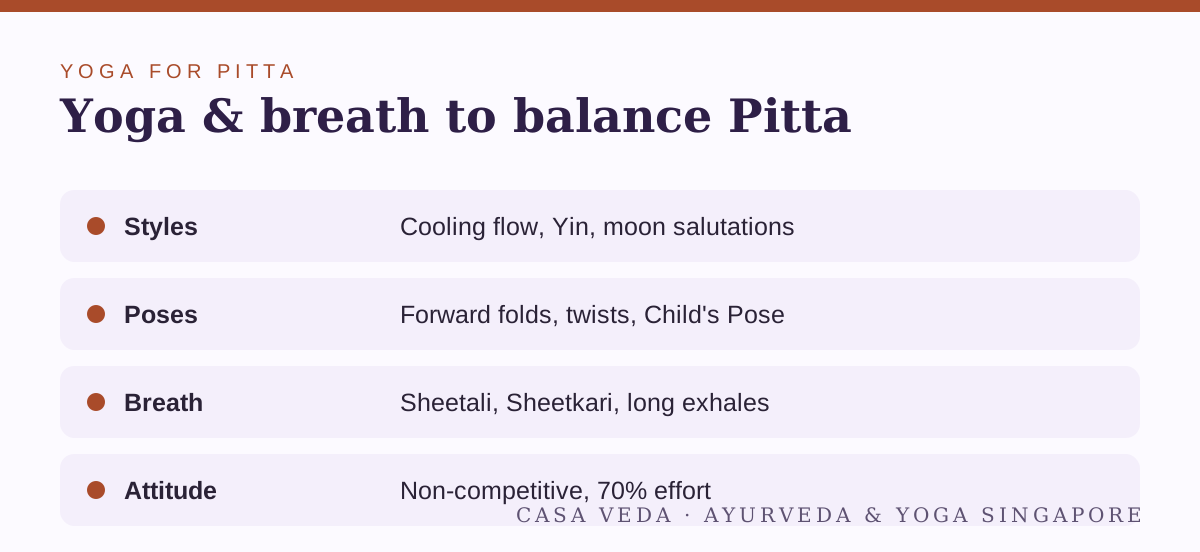
Pitta dosha needs cooling, gentle yoga that softens effort. Practise with curiosity rather than competition, and let go of the goal of a perfect pose.
- Styles: a cooling, slower flow, Yin and gentle Kundalini; moon salutations instead of sun salutations
- Poses: seated forward folds, gentle twists, Child's Pose, Bridge, Legs-Up-the-Wall
- Breath: deep breathing with long exhales, plus Sheetali and Sheetkari
- Rest: finish with Savasana in a cool, airy room
Sheetali is breathing in through a curled tongue; Sheetkari is breathing in through closed teeth. Both are traditional cooling breaths. Skip them if you have low blood pressure, asthma, a cold or sensitive teeth, and learn them first with a teacher. At CASA VEDA, Livia teaches cooling yoga and breathwork, with music and mindfulness woven into each session.
See yoga for your dosha, or book private yoga in Singapore.
Ayurvedic treatments that cool Pitta dosha
Abhyanga with coconut oil or another cooling oil calms warm, sensitive skin and a busy mind. Shirodhara, a steady stream of oil over the forehead, is traditionally used to settle an overworked, overheated mind. Both are offered as Ayurvedic therapy in Singapore. Herbs such as amalaki and brahmi are often linked with Pitta, but take herbs only on the advice of a qualified Ayurvedic practitioner, especially if you take medication.
Vata, Kapha and Pitta compared
| Vata | Pitta | Kapha | |
|---|---|---|---|
| Elements | Air + space | Fire + water | Earth + water |
| Qualities | Cold, dry, light, mobile | Hot, sharp, light, oily | Heavy, slow, stable |
| Body | Thin, light | Medium, athletic | Solid, strong |
| Out of balance | Anxiety, dryness, bloating | Irritability, heat, acidity | Sluggishness, congestion |
| Balanced by | Warmth, routine, oil | Cooling, calm, moderation | Movement, lightness |
Read our guides to Vata dosha and Kapha dosha.
Pitta in Singapore
Singapore is hot and humid all year, so Pitta imbalance is common here, even in people who are not Pitta types. Midday sun, chilli in many favourite dishes, long working hours and a competitive pace all add fire. Small changes help balance Pitta here: walk early or after sunset, keep coconut water to hand, ask for less chilli and make time to rest. Read more in Ayurveda for Singapore's heat and humidity. To support balance in a way made for you, an Ayurvedic consultation in Singapore gives you a plan for your body and mind.
Pitta dosha FAQs
What are the symptoms of high Pitta?
High Pitta often shows up as feeling hot, heavy sweating, acidity or heartburn, an upset gut, irritated skin or rashes, red eyes, irritability and burnout. These are traditional signs, not a diagnosis.
What foods should Pitta avoid?
Pitta should reduce spicy food, hot spices, fried foods, red meat, salty foods, sour foods and sour fruits, fermented foods, coffee and excessive alcohol. If you drink, food lists for Pitta often allow an occasional beer over spirits.
How do I cool Pitta fast?
Get out of the heat, sip coconut water or cool water, splash your face with cool water and slow your breath. A few rounds of Sheetali may help, if it suits you.
Which yoga is best for Pitta?
Cooling, non-competitive yoga: a slower flow, Yin, moon salutations, forward folds and twists, with long exhales and a long Savasana. Practise at about 70% effort.
Can Pitta drink coffee?
Ayurveda sees coffee as heating and acidic, so Pitta types do best with less. Many Pitta types keep to one cup after food, or swap it for mint tea or coconut water.
More from the journal
Vata Dosha: What It Is & How to Balance It
Air and space in motion. The Vata body type, signs of Vata imbalance, and the food, routine and yoga that bring Vata back to calm.
Read · 9 min →DoshasKapha Dosha: What It Is & How to Balance It
Earth and water, steady and strong. The Kapha body type, signs of a Kapha imbalance, and the food, movement and yoga that bring Kapha back to lightness.
Read · 9 min →YogaYoga for Your Dosha: Best Practice for Vata, Pitta & Kapha
Ayurvedic yoga for Vata, Pitta and Kapha: the styles, poses and breathing that suit each dosha, and what to avoid.
Read · 8 min →Find out how much Pitta you have
Book an Ayurvedic consultation with Livia in Singapore, by appointment, and get a cooling plan made for your dosha.